






-
뉴스
-
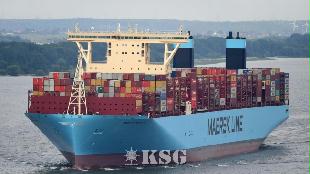
- Maersk and PUMA Expand Partnership to Unlock Greate...
- A.P. Moller - Maersk (Maersk) today announced it has begun managing PUMA’s North America distribution network, which includes three large, highly automated warehouses in California, Arizona, and Indiana totaling about 2.3 million square feet. PUMA, one of the world...
-
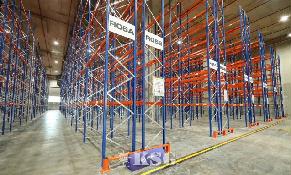
- DP World Expands Contract Logistics Network In Thai...
- DP World today announced the opening of a new contract logistics distribution centre in Bang Na, expanding its logistics capacity in Thailand and strengthening its ability to support customers across key manufacturing and consumer sectors. The approximately 10,000-squa...
-
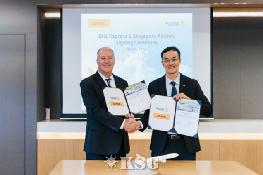
- DHL Express and Singapore Airlines Extend Boeing 77...
- DHL Express and Singapore Airlines (SIA) have renewed their crew and maintenance agreement for five Boeing 777 freighters based at Singapore Changi Airport. Under the agreement, SIA pilots will continue to operate the five freighters, while SIA engineers will oversee t...
-
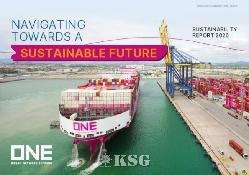
- Ocean Network Express Publishes Sustainability Repo...
- Ocean Network Express (ONE) has published its Sustainability Report 2026, covering the period from 1 April 2025 to 31 March 2026. The report highlights ONE's progress and initiatives across four sustainability pillars: Environment, Operational Excellence, Social, a...
-
- 운항스케줄
-
오피니언





















2000-09-05 19:03
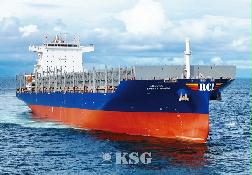
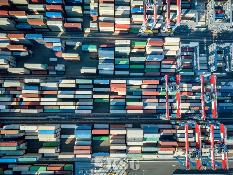
Why Is Maersk-Sealand Changing Their Hub Port to PTP?


Maersk-Sealand announced recently that it will move its hub port from
Singapore to the Port of Tanjung Pelepas (PTP) in Malaysia. This annou
ncement rose in the middle of serious competition amongst nearby ports
. Analysts predict that the Singapore port will lose popularity as a h
ub port.
There are three main reasons for Maersk-Sealand to change their hub po
rt to PTP.
First, Maersk-Sealand has purchased a 30 percent share of PTP stocks a
nd obtained their own terminal. By using a private terminal, Maersk-Se
aland expects to offer various and highly advanced customer services t
hrough Maersk-Logistic, Maersk-Distribution, and Maersk-Malaysia in Ma
laysia.
Secondly, Maersk-Sealand pointed out that since 1995, harbor fees have
been quite expensive and that the Port of Singapore has taken no heed
of this and rather raised the rates incessantly. It was said that PTP
presented rates 30 percent less.
Thirdly, Maersk-Sealand prefers to operate their own exclusive termina
l to serve faster and more stable services to customers. It was nearly
impossible to obtain an exclusive terminal at the Port of Singapore a
nd would remain so in the foreseeable future.
Dr. Paek, Chong-shil, working for the KMI (Korea Maritime Institute),
proposed several things for the Korean government to be careful of.
Foremost, a country oriented towards logistics has to offer real space
to supply the quality services that shippers and shipping companies p
refer. It must be possible for ultra-giant and fast container ships to
call at once and be highly productive while offering additional logis
tic services.
Secondly, transshipment ports have to be developed and invested in wit
hout stop in order to supply a variety of logistic services.
Thirdly, hub ports have to provide opportunities for shipping lines to
obtain private terminals to give more stable logistic services.
Finally, the rates in harbor are also an important factor to draw more
shipping companies.
For Pusan and Kwangyang to succeed as transshipment ports, it is neces
sary to balance allowing exclusive terminals, offering additional serv
ices, advancing productivity, and having proper rates policies.
Singapore to the Port of Tanjung Pelepas (PTP) in Malaysia. This annou
ncement rose in the middle of serious competition amongst nearby ports
. Analysts predict that the Singapore port will lose popularity as a h
ub port.
There are three main reasons for Maersk-Sealand to change their hub po
rt to PTP.
First, Maersk-Sealand has purchased a 30 percent share of PTP stocks a
nd obtained their own terminal. By using a private terminal, Maersk-Se
aland expects to offer various and highly advanced customer services t
hrough Maersk-Logistic, Maersk-Distribution, and Maersk-Malaysia in Ma
laysia.
Secondly, Maersk-Sealand pointed out that since 1995, harbor fees have
been quite expensive and that the Port of Singapore has taken no heed
of this and rather raised the rates incessantly. It was said that PTP
presented rates 30 percent less.
Thirdly, Maersk-Sealand prefers to operate their own exclusive termina
l to serve faster and more stable services to customers. It was nearly
impossible to obtain an exclusive terminal at the Port of Singapore a
nd would remain so in the foreseeable future.
Dr. Paek, Chong-shil, working for the KMI (Korea Maritime Institute),
proposed several things for the Korean government to be careful of.
Foremost, a country oriented towards logistics has to offer real space
to supply the quality services that shippers and shipping companies p
refer. It must be possible for ultra-giant and fast container ships to
call at once and be highly productive while offering additional logis
tic services.
Secondly, transshipment ports have to be developed and invested in wit
hout stop in order to supply a variety of logistic services.
Thirdly, hub ports have to provide opportunities for shipping lines to
obtain private terminals to give more stable logistic services.
Finally, the rates in harbor are also an important factor to draw more
shipping companies.
For Pusan and Kwangyang to succeed as transshipment ports, it is neces
sary to balance allowing exclusive terminals, offering additional serv
ices, advancing productivity, and having proper rates policies.


선박운항스케줄
인기 스케줄
-
BUSAN
 JEDDAH
선박운항스케줄 목록 - 선박운항스케줄목록으로 Vessel, D-Date, A-Date, Agent를 나타내는 테이블입니다. Vessel D-Date A-Date Agent Xin Chang Shu 10/26 12/10 ESL Kmtc Mundra 10/28 12/12 ESL Song Yun He 10/30 12/21 KWANHAE SHIPPING -
INCHEON
DAVAO선박운항스케줄 목록 - 선박운항스케줄목록으로 Vessel, D-Date, A-Date, Agent를 나타내는 테이블입니다. Vessel D-Date A-Date Agent Ever Vista 11/06 11/30 Evergreen Ever Certain 11/10 11/27 Evergreen -
BUSAN
NAGOYA선박운항스케줄 목록 - 선박운항스케줄목록으로 Vessel, D-Date, A-Date, Agent를 나타내는 테이블입니다. Vessel D-Date A-Date Agent Progress 10/20 10/23 Taiyoung Pegasus Peta 10/20 10/24 Pan Star Dongjin Fortune 10/20 10/24 Pan Star -
BUSAN
TOKYO선박운항스케줄 목록 - 선박운항스케줄목록으로 Vessel, D-Date, A-Date, Agent를 나타내는 테이블입니다. Vessel D-Date A-Date Agent Ty Incheon 10/19 10/21 KMTC Pegasus Peta 10/20 10/22 Pan Star Dongjin Fortune 10/20 10/22 Pan Star -
MASAN
VANCOUVER B.C.선박운항스케줄 목록 - 선박운항스케줄목록으로 Vessel, D-Date, A-Date, Agent를 나타내는 테이블입니다. Vessel D-Date A-Date Agent Asian Naga 11/25 12/26 ECL Korea
- 출발항
-
- 도착항
-


많이 본 기사
- 컨운임지수 소폭 상승…유럽 3개월만에 반등대한항공, 3분기 매출 ‘역대 최대’…5조원 돌파해운협회 부산본부, 선사 AI 전환 지원 구체화…부산산업진흥원과 MOU부음/ 팬오션 장석각 본부장 모친상태국 RCL, 컨선 확대 박차…현존선단 160% 발주세계 100대 항만 물동량 8억TEU 눈앞…亞 성장세 뚜렷LX판토스, 청라에 로봇·AI 물류기술 실증 거점 개소싸이버로지텍, 도루코 베트남 창고관리시스템 디지털전환 돕는다광양경자청, 해양플랜트산업전서 글로벌 조선사 겨냥 투자유치 나서DP월드, 아태지역 CEO에 제이슨 바르사미디스 선임
- 해운중개업협회, 내달 선박거래와 해운중개 실무교육DP월드, 부산 터미널에 전기 야드트랙터 55대 도입국고 지원해 제주-추자-완도 여객선항로 중단 막는다IPA, 만트럭버스코리아와 아암물류2단지서 화물차 무상 정비삼성重, 노르웨이선급서 탱크선 하이브리드 시스템 기본인증 획득해양진흥공사, 내달 16일까지 해양사진 공모…총상금 3000만원여수광양항만공사, 세풍항만배후단지 입주기업 모집대한항공, 국제 여행산업 시상식서 8개상 수상HD현대삼호, 목포해양대·목포대에 발전기금 6000만원 기탁울산항만공사, 건설현장·항만시설물 안전컨설팅 본격 착수


스케줄 많이 검색한 항구

해사물류 통계 





COPYRIGHTⓒ 2014 KOREA SHIPPING GAZETTE. ALL RIGHTS RESERVED.

COPYRIGHTⓒ 2015
KOREA SHIPPING GAZETTE. ALL RIGHTS RESERVED.
0/250
확인