






-
뉴스
-
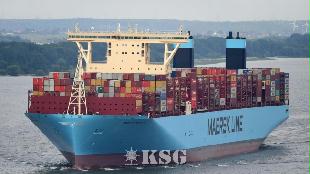
- Maersk and PUMA Expand Partnership to Unlock Greate...
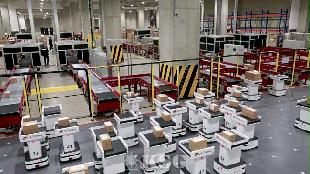
- A.P. Moller - Maersk (Maersk) today announced it has begun managing PUMA’s North America distribution network, which includes three large, highly automated warehouses in California, Arizona, and Indiana totaling about 2.3 million square feet. PUMA, one of the world...
-
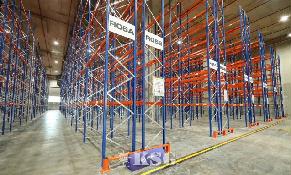
- DP World Expands Contract Logistics Network In Thai...
- DP World today announced the opening of a new contract logistics distribution centre in Bang Na, expanding its logistics capacity in Thailand and strengthening its ability to support customers across key manufacturing and consumer sectors. The approximately 10,000-squa...
-
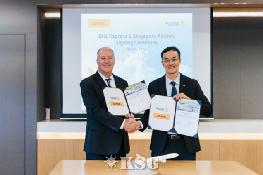
- DHL Express and Singapore Airlines Extend Boeing 77...
- DHL Express and Singapore Airlines (SIA) have renewed their crew and maintenance agreement for five Boeing 777 freighters based at Singapore Changi Airport. Under the agreement, SIA pilots will continue to operate the five freighters, while SIA engineers will oversee t...
-
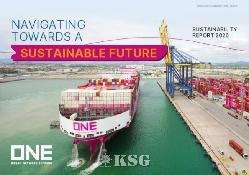
- Ocean Network Express Publishes Sustainability Repo...
- Ocean Network Express (ONE) has published its Sustainability Report 2026, covering the period from 1 April 2025 to 31 March 2026. The report highlights ONE's progress and initiatives across four sustainability pillars: Environment, Operational Excellence, Social, a...
-
- 운항스케줄
-
오피니언























2001-06-01 14:22
Paradigm Shift with Inter-Korean Railroad Connection


There is potential for Korea to be a logistic hub in North East Asia.
South and North Korea reached an agreement to restore "Kyoungui Rail"
after the inter-Korean summit talks, which had been held for the firs
t time since Korea was divided in two 50 years ago.
Kyoungui Rail which connects Seoul with Shinuiju in North Korea will h
elp the Korean peninsula become a main logistic point in North East As
ia, linking the inter-Korean railroad with the Trans Siberian Rail(TSR
) and the Trans China Rail (TCR), finally accomplishing a connection b
etween Asia and Europe, and completing the Eurasia railroad system.
It is doubtful that this 20 km railway, disconnected since the North a
nd South Korean confrontation, will cause this huge effect. But it is
shown through abundant reports and data that an inter-Korean railroad
might greatly affect transportation and logistics.
Political analysts said that the restoration of the inter-Korean railr
oad implied a deeper cooperation between the South and North Korea. Lo
gistics experts, however, evaluated this business as having potential
and value based upon actually restoring the old rail and establishing
a working logistical system.
Restoration of the inter-Korea railroad system, which could be connect
ed with Eurasian railroad chains and Japan, might lead to an economic
revolution for North East Asia as well as the aforementioned logistic
changes. Using the "Kyoungui rail" could cut logistic costs while gett
ing cargoes to their destination on time. North Korea would also reap
benefits by earning user fees and developing tourism linking the Korea
n Peninsula with China, Russia and Europe.
The Korean peninsula could occupy a major position in the global traff
ic network if shippers in North East Asia accept rail transportation.
South and North Korea reached an agreement to restore "Kyoungui Rail"
after the inter-Korean summit talks, which had been held for the firs
t time since Korea was divided in two 50 years ago.
Kyoungui Rail which connects Seoul with Shinuiju in North Korea will h
elp the Korean peninsula become a main logistic point in North East As
ia, linking the inter-Korean railroad with the Trans Siberian Rail(TSR
) and the Trans China Rail (TCR), finally accomplishing a connection b
etween Asia and Europe, and completing the Eurasia railroad system.
It is doubtful that this 20 km railway, disconnected since the North a
nd South Korean confrontation, will cause this huge effect. But it is
shown through abundant reports and data that an inter-Korean railroad
might greatly affect transportation and logistics.
Political analysts said that the restoration of the inter-Korean railr
oad implied a deeper cooperation between the South and North Korea. Lo
gistics experts, however, evaluated this business as having potential
and value based upon actually restoring the old rail and establishing
a working logistical system.
Restoration of the inter-Korea railroad system, which could be connect
ed with Eurasian railroad chains and Japan, might lead to an economic
revolution for North East Asia as well as the aforementioned logistic
changes. Using the "Kyoungui rail" could cut logistic costs while gett
ing cargoes to their destination on time. North Korea would also reap
benefits by earning user fees and developing tourism linking the Korea
n Peninsula with China, Russia and Europe.
The Korean peninsula could occupy a major position in the global traff
ic network if shippers in North East Asia accept rail transportation.


선박운항스케줄
인기 스케줄
-
BUSAN
 JEDDAH
선박운항스케줄 목록 - 선박운항스케줄목록으로 Vessel, D-Date, A-Date, Agent를 나타내는 테이블입니다. Vessel D-Date A-Date Agent Xin Chang Shu 10/26 12/10 ESL Kmtc Mundra 10/28 12/12 ESL Song Yun He 10/30 12/21 KWANHAE SHIPPING -
INCHEON
DAVAO선박운항스케줄 목록 - 선박운항스케줄목록으로 Vessel, D-Date, A-Date, Agent를 나타내는 테이블입니다. Vessel D-Date A-Date Agent Ever Vista 11/06 11/30 Evergreen Ever Certain 11/10 11/27 Evergreen -
BUSAN
NAGOYA선박운항스케줄 목록 - 선박운항스케줄목록으로 Vessel, D-Date, A-Date, Agent를 나타내는 테이블입니다. Vessel D-Date A-Date Agent Progress 10/20 10/23 Taiyoung Pegasus Peta 10/20 10/24 Pan Star Dongjin Fortune 10/20 10/24 Pan Star -
BUSAN
TOKYO선박운항스케줄 목록 - 선박운항스케줄목록으로 Vessel, D-Date, A-Date, Agent를 나타내는 테이블입니다. Vessel D-Date A-Date Agent Ty Incheon 10/19 10/21 KMTC Pegasus Peta 10/20 10/22 Pan Star Dongjin Fortune 10/20 10/22 Pan Star -
MASAN
VANCOUVER B.C.선박운항스케줄 목록 - 선박운항스케줄목록으로 Vessel, D-Date, A-Date, Agent를 나타내는 테이블입니다. Vessel D-Date A-Date Agent Asian Naga 11/25 12/26 ECL Korea
- 출발항
-
- 도착항
-


많이 본 기사
- 컨운임지수 소폭 상승…유럽 3개월만에 반등대한항공, 3분기 매출 ‘역대 최대’…5조원 돌파해운협회 부산본부, 선사 AI 전환 지원 구체화…부산산업진흥원과 MOU부음/ 팬오션 장석각 본부장 모친상태국 RCL, 컨선 확대 박차…현존선단 160% 발주세계 100대 항만 물동량 8억TEU 눈앞…亞 성장세 뚜렷LX판토스, 청라에 로봇·AI 물류기술 실증 거점 개소싸이버로지텍, 도루코 베트남 창고관리시스템 디지털전환 돕는다광양경자청, 해양플랜트산업전서 글로벌 조선사 겨냥 투자유치 나서DP월드, 아태지역 CEO에 제이슨 바르사미디스 선임
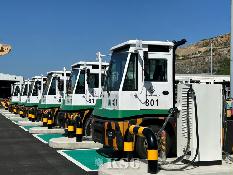
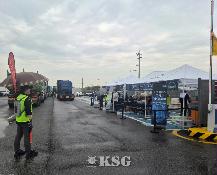
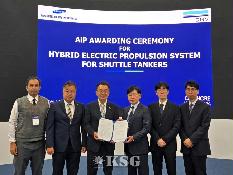
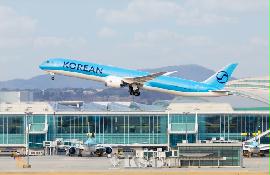
- 해운중개업협회, 내달 선박거래와 해운중개 실무교육DP월드, 부산 터미널에 전기 야드트랙터 55대 도입국고 지원해 제주-추자-완도 여객선항로 중단 막는다IPA, 만트럭버스코리아와 아암물류2단지서 화물차 무상 정비삼성重, 노르웨이선급서 탱크선 하이브리드 시스템 기본인증 획득여수광양항만공사, 세풍항만배후단지 입주기업 모집해양진흥공사, 내달 16일까지 해양사진 공모…총상금 3000만원대한항공, 국제 여행산업 시상식서 8개상 수상HD현대삼호, 목포해양대·목포대에 발전기금 6000만원 기탁울산항만공사, 건설현장·항만시설물 안전컨설팅 본격 착수


스케줄 많이 검색한 항구

해사물류 통계 





COPYRIGHTⓒ 2014 KOREA SHIPPING GAZETTE. ALL RIGHTS RESERVED.

COPYRIGHTⓒ 2015
KOREA SHIPPING GAZETTE. ALL RIGHTS RESERVED.
0/250
확인