





-
뉴스
-
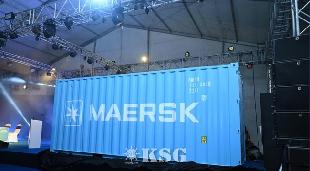
- Union Minister Sonowal Unveils Maersk’s First Ind...
- A.P. Moller – Maersk, the world's leading integrated shipping and logistics company, today achieved a historic milestone in India's maritime sector by becoming the first international shipping line to procure an export-import (EXIM) shipping container man...
-
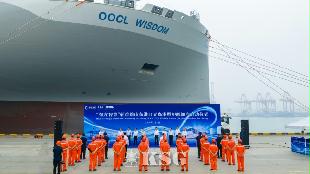
- OOCL Wisdom Completes First Green Methanol Bunkerin...
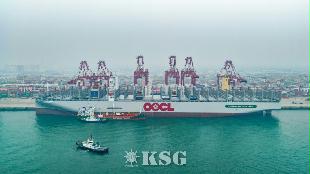
- ?Orient Overseas Container Line Ltd. (OOCL)'s first methanol dual-fuel containership, OOCL Wisdom, today completed its first green methanol bunkering and commenced its maiden voyage at Qingdao Port, marking another milestone in the company's fleet development a...
-
- WinGD secures engine order for 12-vessel VLCC newbu...
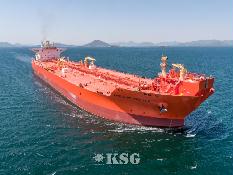
- Swiss marine power company WinGD has secured an order to supply main engines for a series of 12 Very Large Crude Carriers (VLCCs) being built at Hudong-Zhonghua Shipbuilding, China, for Dynacom, supporting the delivery of a new generation of efficient, reliable and reg...
-
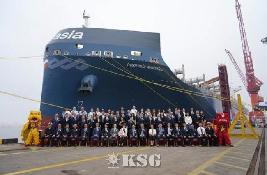
- Interasia Names 7000TEU Containership to Strengthen...
- Interasia Lines held the naming ceremony for our new 7,000 TEU containership, “Interasia Ambition,” on June 18 at Shanghai Waigaoqiao Shipbuilding Co., Ltd. The ceremony was jointly hosted by Mr. Jeff Lo, Executive Vice President of Interasia Lines, and Mr. Zhang W...
-
- 운항스케줄
-
오피니언

















2001-08-18 09:55
Summit talks between N.K. and Russia push TSR connection up to 2003


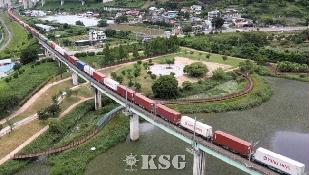
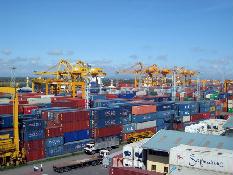
Huge changes in Northeast Asian logistics systems are expected as North Korean leader Kim Jong-il and Russian President Vladimir Putin agreed to connect the inter-Korean Railroad with the Trans-Siberian Railway (TSR). This connection could attract European bound cargoes from Korea and Japan that have to date only been able to make use of sea and air transportation.
Experts predicted that as the result of North Korean and Russian summit talks Gyeongeui (Seoul-Pyongyang) Line restoration will be accelerated in order to transport goods via the TSR by 2003. They also pointed out technical and political problems that will have to be solved as soon as possible to connect both railroads by 2003.
According to a report from the Ministry of Construction and Transportation (MOCT), after an on-the-spot survey of the TSR last year, the economic benefits to South Korea could well be far beyond previous expectations, if the TSR and Inter-Korean Rail are connected together.
Container cargoes between Korea and Western Europe number 800,000 TEU annually. Sea routes from Pusan to Hamburg in Western Europe are 19,200 km long, taking an average of 26 days. Each container costs about 1,200 to 1,400 dollars. However, if the TSR came into play, the distance would be shortened by 6,800 km, cutting off 8 days of transit time. The cost could also be halved to 600 dollars.
On the Russian side, it would secure tolls of 400 million dollars annually, adding 500,000 TEU to its cargoes, that is, if the inter-Korean railway is connected to the TSR. North Korea also can be expected to garner 100 million dollars in tolls annually.
However, the largest problem is how to fit together the different rails in inter-Korean railway and the TSR; TSR rails are broader than their Korean counterparts. Under the current situation, cargoes will have to be transshipped to the TSR at the North Korea border. To avoid the hassles of transshipment, trains with variable axle widths will have to be developed.
The cargo costs from Pusan to Vladivostok may also be too high at 600 dollars, decreasing the attraction of using the TSR. In addition, timely services in Russia and North Korea are in doubt, cargo losses are a genuine concern, and the possibility of political chaos also may block the successful connection of the inter-Korean railway and the TSR.
Experts predicted that as the result of North Korean and Russian summit talks Gyeongeui (Seoul-Pyongyang) Line restoration will be accelerated in order to transport goods via the TSR by 2003. They also pointed out technical and political problems that will have to be solved as soon as possible to connect both railroads by 2003.
According to a report from the Ministry of Construction and Transportation (MOCT), after an on-the-spot survey of the TSR last year, the economic benefits to South Korea could well be far beyond previous expectations, if the TSR and Inter-Korean Rail are connected together.
Container cargoes between Korea and Western Europe number 800,000 TEU annually. Sea routes from Pusan to Hamburg in Western Europe are 19,200 km long, taking an average of 26 days. Each container costs about 1,200 to 1,400 dollars. However, if the TSR came into play, the distance would be shortened by 6,800 km, cutting off 8 days of transit time. The cost could also be halved to 600 dollars.
On the Russian side, it would secure tolls of 400 million dollars annually, adding 500,000 TEU to its cargoes, that is, if the inter-Korean railway is connected to the TSR. North Korea also can be expected to garner 100 million dollars in tolls annually.
However, the largest problem is how to fit together the different rails in inter-Korean railway and the TSR; TSR rails are broader than their Korean counterparts. Under the current situation, cargoes will have to be transshipped to the TSR at the North Korea border. To avoid the hassles of transshipment, trains with variable axle widths will have to be developed.
The cargo costs from Pusan to Vladivostok may also be too high at 600 dollars, decreasing the attraction of using the TSR. In addition, timely services in Russia and North Korea are in doubt, cargo losses are a genuine concern, and the possibility of political chaos also may block the successful connection of the inter-Korean railway and the TSR.


선박운항스케줄
인기 스케줄
-
INCHEON
 TAIPEI
선박운항스케줄 목록 - 선박운항스케줄목록으로 Vessel, D-Date, A-Date, Agent를 나타내는 테이블입니다. Vessel D-Date A-Date Agent Wan Hai 371 07/31 08/04 Interasia Lines Korea Wan Hai 371 07/31 08/04 Wan hai Ever Command 08/13 08/18 Evergreen -
BUSAN
SHUWAIKH선박운항스케줄 목록 - 선박운항스케줄목록으로 Vessel, D-Date, A-Date, Agent를 나타내는 테이블입니다. Vessel D-Date A-Date Agent One Maestro 07/28 08/25 ESL One Maestro 07/28 09/18 BEN LINE Herta 07/29 09/16 BEN LINE -
BUSAN
CHENNAI선박운항스케줄 목록 - 선박운항스케줄목록으로 Vessel, D-Date, A-Date, Agent를 나타내는 테이블입니다. Vessel D-Date A-Date Agent Wan Hai 521 07/22 08/10 FARMKO GLS Tiger Chennai 07/25 08/13 FARMKO GLS Xin Tian Jin 07/25 08/14 Waypoint Port Services Korea -
BUSAN
GEMLIK선박운항스케줄 목록 - 선박운항스케줄목록으로 Vessel, D-Date, A-Date, Agent를 나타내는 테이블입니다. Vessel D-Date A-Date Agent Msc Leanne 07/31 09/28 MSC Korea Msc London 08/07 10/05 MSC Korea Msc Rifaya 08/14 10/12 MSC Korea -
BUSAN
SANTOS선박운항스케줄 목록 - 선박운항스케줄목록으로 Vessel, D-Date, A-Date, Agent를 나타내는 테이블입니다. Vessel D-Date A-Date Agent Hmm Juniper 07/21 08/28 HMM Ym Modesty 07/23 08/28 HMM Hmm Premium 07/26 09/04 HMM
- 출발항
-
- 도착항
-



많이 본 기사
- 中 허난성, 해외 연결 철도물류거점 29곳으로 늘어머스크, 부산‑남미서안 신항로 개설전세계 항만 효율성 하락세…부산항은 성장곡선HMM, 美 캘리포니아-한국항로서 오렌지 수송 4년 연속 1위KMI, 한중 친환경 선박 협력 모색인천항만공사, 옹진군 결식우려아동에 1000만원 지원해양재단, <한국해양사> 5권 완간…16년만에 결실수요공급으로 설명되던 컨시장은 끝났다부산항만공사-신선대감만터미널, 희망곳간 후원 확대조선기자재연구원, AI·로봇산업협회와 조선업 디지털전환 협력 추진
- BPA, 해운항만 창업플랫폼 ‘1876 부산’ 입주기업 지원 확대여수광양항, 스타트업과 안전·환경·관광 기술실증 추진양재생 회장, 李 대통령 몽골 경제사절단 동행여수광양항, 북극항로 연계 에너지 물류 허브 구축KIFFA, 국제물류기업 경영진 대상 AI 포럼 개최홍콩 OOCL, 2.4만TEU급 컨선에 메탄올연료 첫 급유조선해양플랜트協, 산업연구원등과 조선시장 기후변화 대응방안 모색기고/ 전국 4개 항만공사 강제 통합의 위법성BPA-부산해수청, 20~24일 항만안전문화주간 운영이경규 IPA 사장, 휴가철 맞아 연안여객터미널 안전 점검 실시


스케줄 많이 검색한 항구







COPYRIGHTⓒ 2014 KOREA SHIPPING GAZETTE. ALL RIGHTS RESERVED.

COPYRIGHTⓒ 2015
KOREA SHIPPING GAZETTE. ALL RIGHTS RESERVED.
0/250
확인